
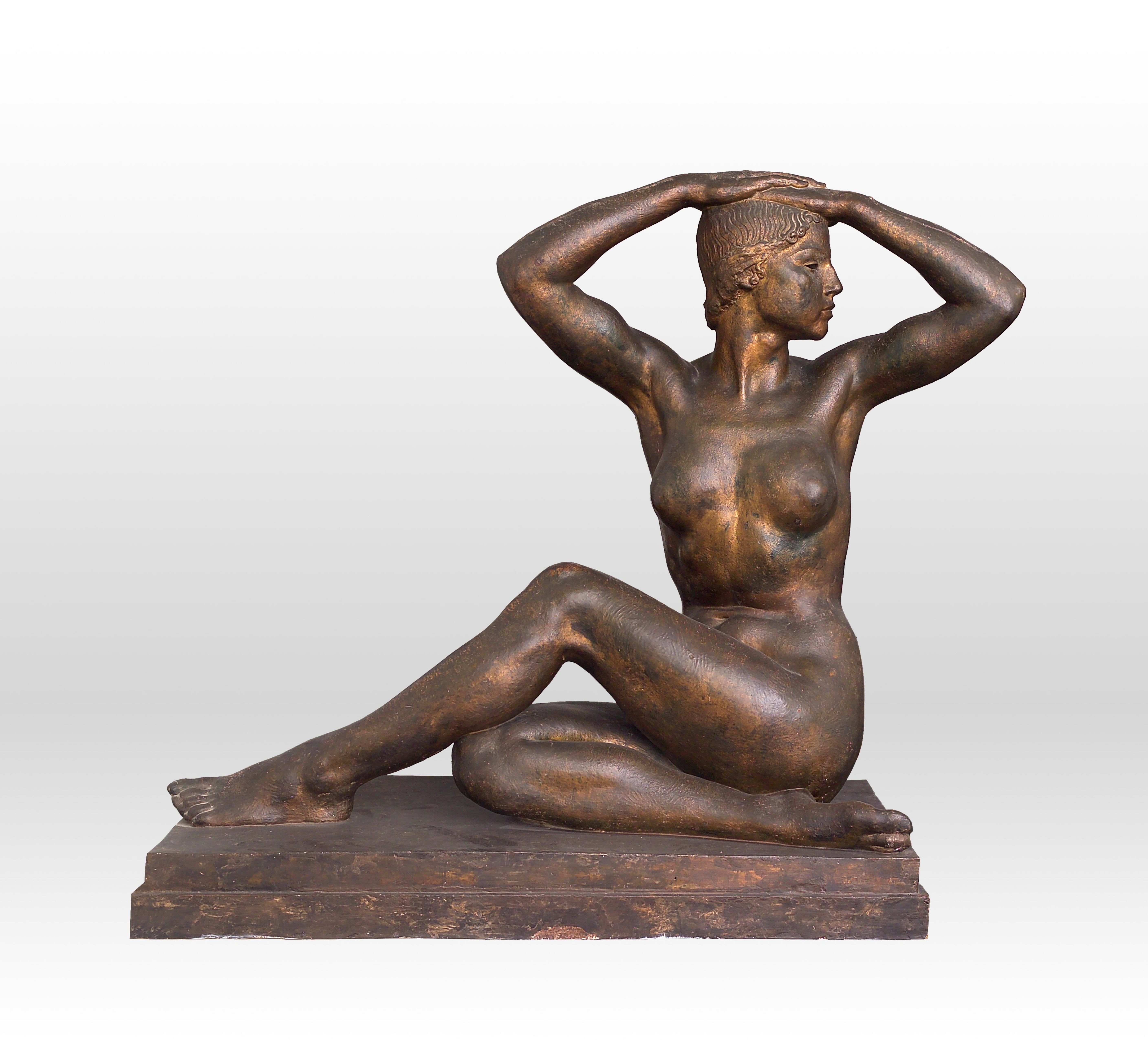
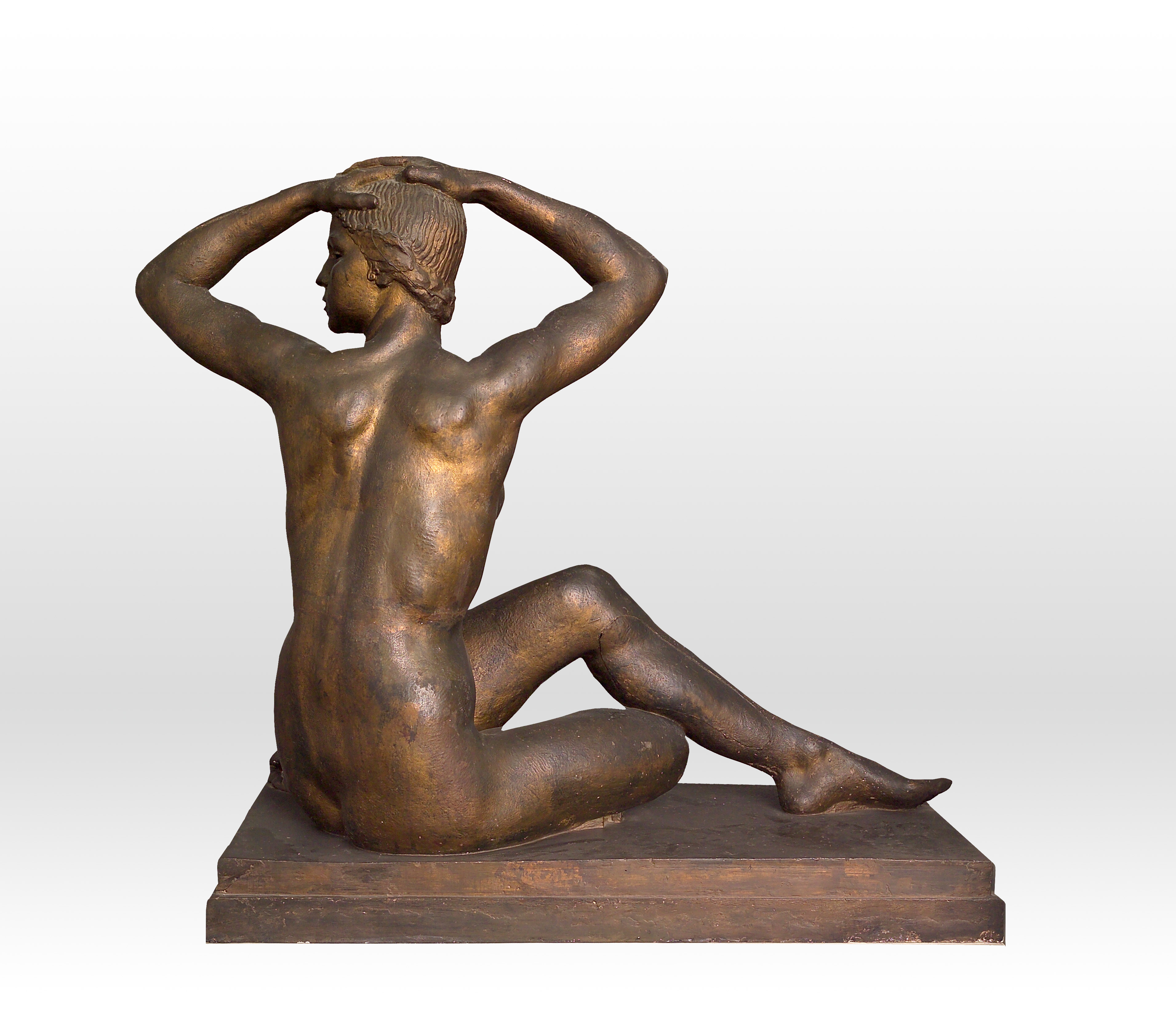
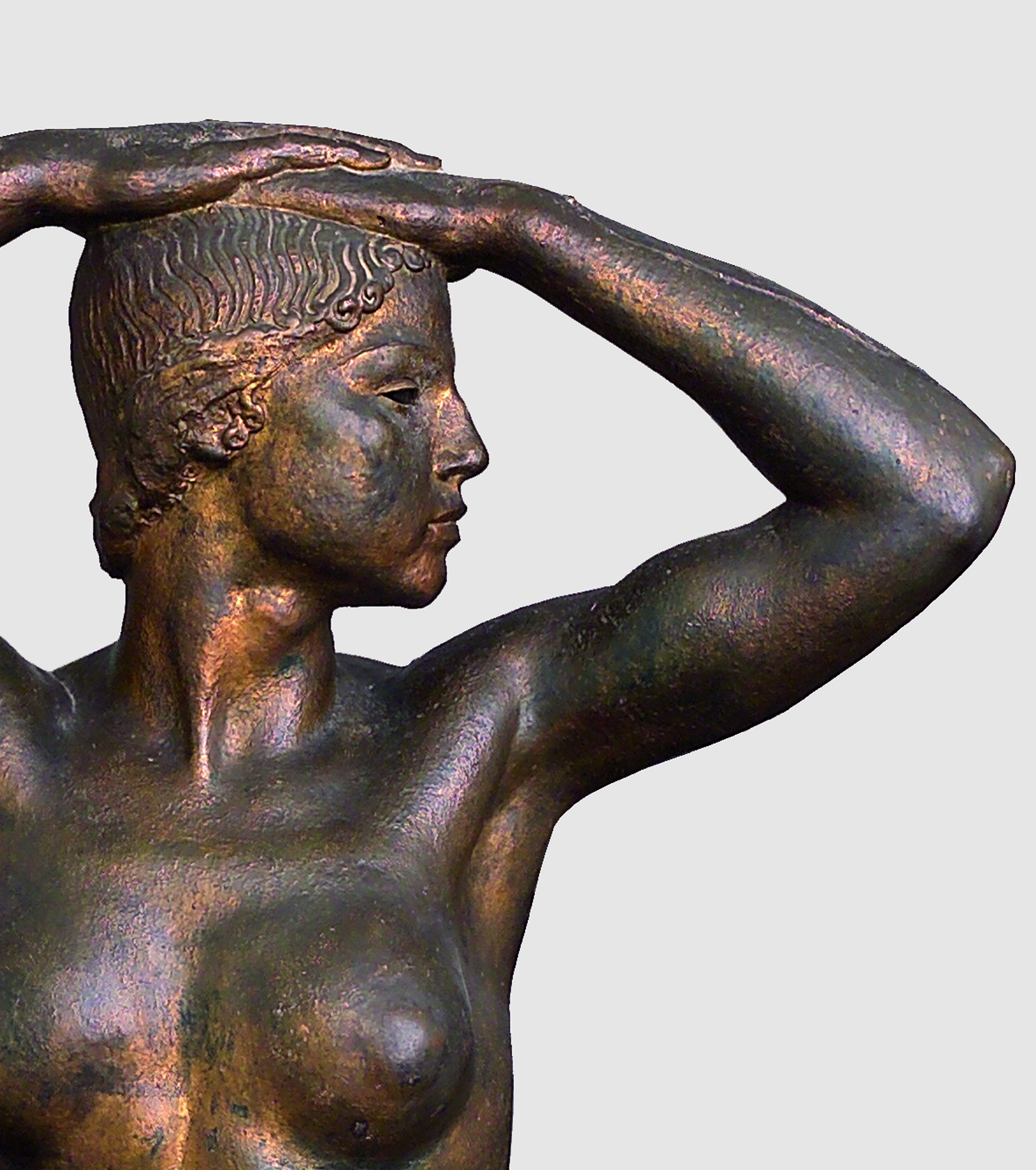
The only known example, Ritmi, a masterpiece by Attilio Selva dating from 1914, exhibited at the Third Exhibition of the Roman Secession in 1915, represents one of the high points of the artist’s sculptural research. At a moment of profound reflection on the relationship between tradition and modernity, Selva developed a personal language that looked to the purity of classical art while interpreting it through a distinctly contemporary sensibility, akin to the currents of the European Secessionist movement. A seductive example of a composed and measured modernity, the sculpture combines classical rigour with a new formal sensibility and rhythmic freedom: every balance arises from a masterful interplay of weights, pauses and juxtapositions, while the sinuous profile of the figure unfolds in a silent tension of solids and voids.
Provenance: Selva Heirs, Rome; Galleria Francesca Antonacci, Rome; Private Collection, Milan. Exhibitions: Rome, 1915; Zurich, 1918; Monza, 1923; Trieste, 1939; Rome, 1987; Rome, 2008.
